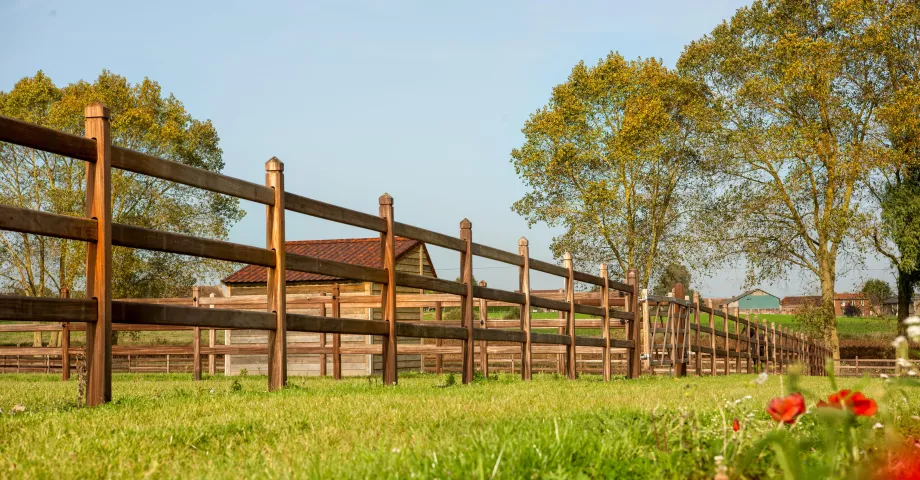
After a wet and cold winter, outdoor wood has been exposed to tough conditions. Rain, frost, and wind can all leave their marks on your wooden fence, field fencing, or garden gate. That’s why spring is the ideal time to inspect your fencing and get it ready for the season ahead.
A simple, well-timed check helps extend the lifespan of your wood and prevents unexpected repairs later on.
Why spring maintenance matters
Wood is a natural material. Changes in temperature and moisture cause it to expand, contract, and sometimes slightly change color. Algae, moss, and dirt tend to build up more easily on damp surfaces, especially in shaded areas.
By cleaning and checking your wooden fence and field gate in time:
- the wood stays in good condition for longer;
- you reduce the risk of decay;
- your animals remain safely contained;
- your garden or property keeps a neat, well-maintained look.
Regular maintenance helps prevent small issues from turning into costly repairs.
1. Removing algae and dirt from your wooden fence
After winter, a light layer of algae or moss on your wooden fence is completely normal. In many cases, a soft brush and water are enough to remove surface dirt.
If you want a deeper clean without damaging the wood, it’s best to use a cleaner designed for outdoor wood. Our Green Cleaner removes algae buildup without the need for heavy scrubbing and is suitable for wooden fences and gates. It helps restore the wood’s fresh, natural appearance.
Avoid using high-pressure washers, as they can damage the wood fibers and cause the surface to wear more quickly.
2. Check your field gate and hardware
A field gate or garden gate is used every day, so it’s important to check a few key points in spring:
- are the posts still stable and straight;
- do the hinges move smoothly;
- do locks and latches close properly;
- are there any cracks or splinters in the wood.
Well-adjusted hinges prevent the gate from sagging and help extend its lifespan. Small adjustments now can save you from more extensive repairs later.
3. Protect your wooden fence from the elements
Even high-quality outdoor wood will gradually turn grey over time due to exposure to sun and rain. If you want to preserve its natural color for longer, you can treat the wood with a water-repellent stain or protective finish.
A suitable wood treatment:
- slows down moisture absorption;
- reduces the risk of cracking;
- supports the long-term durability of your fence.
For the best result, always apply a protective layer to clean, dry wood.
4. Keep the base of your fence clear
In spring, grass and plants grow quickly around fence posts and panels. If the base stays constantly damp due to vegetation, it can increase the risk of wear over time.
Make sure the base of your wooden fence stays clear of dense plants or built-up garden debris. This allows the wood to dry properly after rain and helps keep it in good condition for longer.
Choose quality and long-term care
A wooden fence or field gate doesn’t require complicated maintenance, but it does benefit from regular attention. By cleaning, checking, and protecting it each spring, you can significantly extend its lifespan.
Explore our range of wooden fences and field gates and choose a natural, safe, and durable solution for your garden or field.
Do you have questions about maintenance, protection, or the right products for your situation? Feel free to get in touch for tailored advice. This way, your wooden fence stays in top condition year after year.


